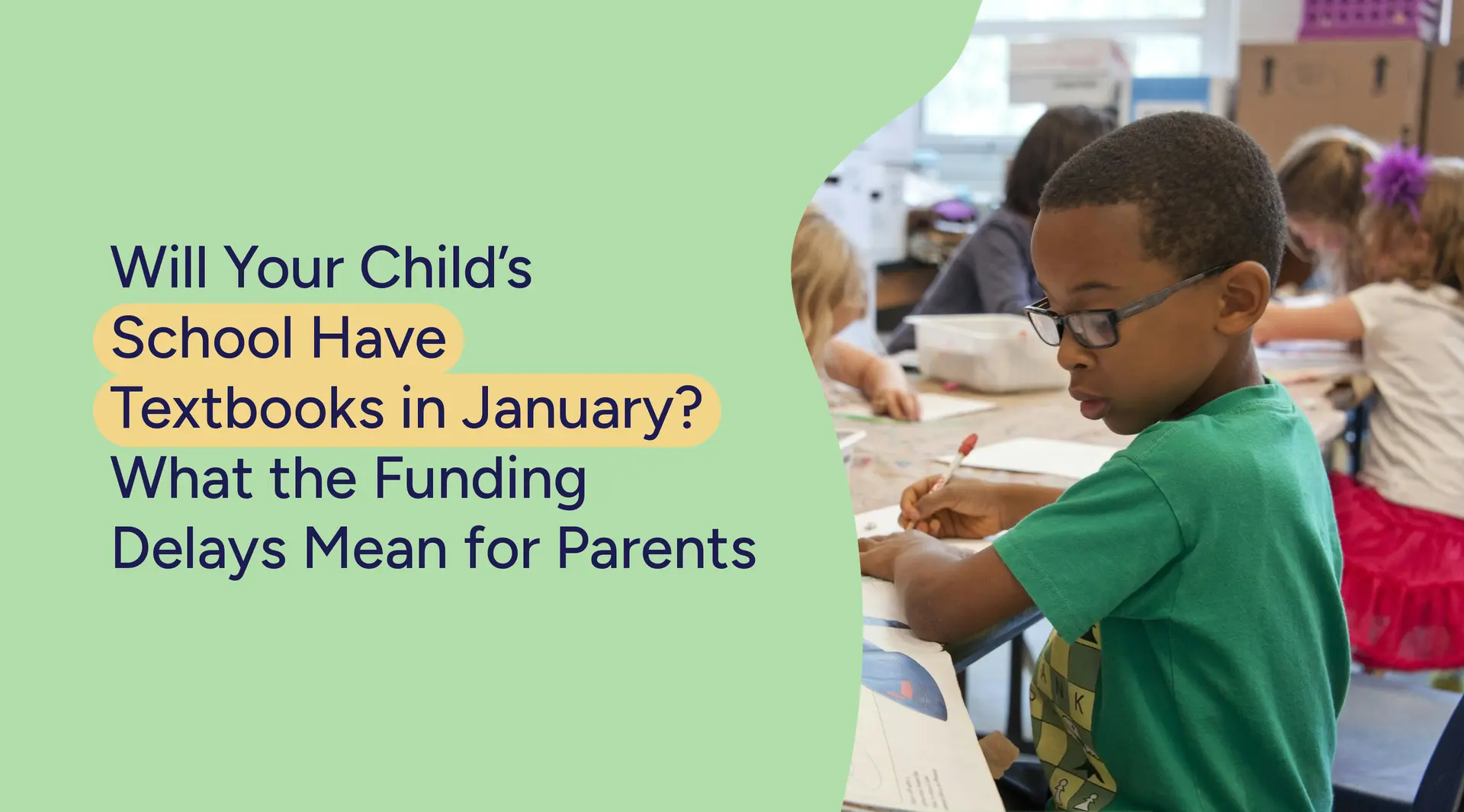
Will Your Child's School Have Textbooks in January? What the Funding Delays Mean for Parents
Many public schools face a cash crunch in January 2027. Gauteng is paying its November school-funding allocation in instalments until March, and North West schools are receiving only half of theirs. That money pays for textbooks, stationery and running costs, and schools close on 9 December, so the time to ask what’s in place for the first term is now — while staff are still there to answer. Learners are entitled to their textbooks; what varies is how ready each school will be.
Many public schools face a cash crunch in January 2027. Gauteng is staggering its November school-funding payment until March, and North West schools are receiving only half of theirs. The money pays for textbooks, stationery and running costs, so ask your school now what it has in place for the first term.
Public schools receive government funding twice a year to cover almost everything except teachers' salaries — textbooks, stationery, electricity, water and repairs. This November, several provinces aren't paying in full or on time. Here's what's happening, what it could mean for your child in January, and what to ask your school.
What's happening
Gauteng: the provincial education department told schools in a circular dated 29 October that it can't pay the full second funding payment by the 15 November deadline. Instead, it will pay in instalments until March 2027, depending on available cash. News24 reports more than 2,070 Gauteng schools were told their full allocations can't be paid. The Gauteng Finance MEC has said the provincial Treasury advised the department to delay payments because of cash-flow constraints.
North West: schools were told their funds would arrive only on 16 November — and, as in May, only half of their allocation, with the rest withheld so the department can buy learning materials centrally, according to Fedsas.
The response: the Federation of Governing Bodies of South African Schools (Fedsas) and the South African Principals' Association (Sapa) have asked the national Department of Basic Education to intervene, warning that schools can't keep covering the gaps. Fedsas has pointed out that money arriving in February or March doesn't help a school that needs resources in January.
It's not the first time this year. In May, seven of the nine provincial education departments missed the deadline for the first payment, according to Fedsas.
How each province paid in May 2026
The November delays follow a difficult first half of the year. According to Fedsas and Daily Maverick, when the first payment fell due on 15 May 2026:
Western Cape and Northern Cape paid schools in full
Gauteng, KwaZulu-Natal and the Eastern Cape hadn't paid anything by the deadline
Limpopo, Mpumalanga, North West and the Free State paid only part — North West and the Free State withheld half, and Limpopo 30%
Gauteng's first payment for the year — part of a total 2026 allocation of about R4.1 billion — was only settled by 31 October, months late.
For November, check your own province. Gauteng and North West have confirmed delays or partial payments; other provinces haven't all reported.
What is the funding, and why does it matter?
It's called Norms and Standards funding. Provinces must pay it to public schools twice a year — by 15 May and by 15 November. The amount depends on the school's quintile: no-fee schools (quintiles 1 to 3) receive more per learner than fee-paying schools.
It pays for everything except salaries:
Textbooks and stationery
Electricity and water
Maintenance and repairs
Service providers
The timing matters. Schools close for the year on 9 December and reopen on 13 January 2027. Money that arrives in instalments to March makes it harder for schools to order stationery and textbooks for the first term.
Section 21 schools and centralised buying: why it matters for textbooks
How your school gets its textbooks depends on its status:
Section 21 schools manage their own allocation and buy their own textbooks and stationery. A delayed or partial payment hits their orders directly.
Other schools have their learning materials bought by the provincial department on their behalf.
North West's approach — withholding half the allocation to buy materials centrally — means some schools' textbooks will come from the department, not the school's own orders. That can work, but delivery timing then depends on the department.
What learning and teaching support materials include: core textbooks, teacher guides, workbooks, stationery, science laboratory equipment, software and library materials.
Will my child have textbooks in January?
It depends on your school, your province and your school's reserves. Some schools will have ordered and paid for first-term materials already; others may delay orders or prioritise essentials.
Learners are entitled to textbooks. The courts have held that learners are entitled to the textbooks they need, delivered before teaching starts — and education departments have to plan around that obligation.
The honest answer: most schools will try hard to have the basics in place. The risk is greatest at schools without reserves, in the provinces paying late or in part.
If your child is starting Grade 1 or Grade 8
New learners face a double uncertainty in Gauteng this year. At least 77,414 Grade 1 and Grade 8 learners were still waiting for a 2027 placement in mid-November — the same weeks the funding delay was announced.
What to do:
Secure the placement first. Respond to any offer within seven days, and fix incomplete applications between 23 November and 4 December.
Ask for the school's stationery list early, once your child is placed — before the January rush.
Buy only what carries over until the school is confirmed: stationery basics, a scientific calculator for Grade 8, school shoes.
Will parents be asked to cover the gap?
At no-fee schools: schools can't charge compulsory fees. They may ask for voluntary contributions, and they may issue stationery lists — but you can't be required to pay school fees.
At fee-paying schools: fees and budgets are set by the school governing body and approved by parents at an annual budget meeting. A funding gap may come up at that meeting — so attend it, and ask how the school plans to cover the shortfall.
Either way, ask before you buy. Don't assume you need to replace textbooks the school is meant to provide.
Questions to ask your school now
Has the school received its November funding payment — in full, in part, or not yet?
Have textbooks and stationery for Term 1 been ordered and paid for?
Will learners receive textbooks on the first day, or later?
Is there a stationery list for January, and what's on it?
Is the school planning to ask parents for contributions?
When is the school's budget meeting for parents?
Ask in writing — through the school's communication app, email or a letter to the principal or governing body — so you have the answer on record.
A letter you can send to your school
Dear [Principal / Chairperson of the School Governing Body],
I'm the parent of [child's name] in Grade [X]. Following reports that some provinces have delayed or reduced this term's school funding payments, I'd be grateful if you could let parents know:
whether the school has received its November allocation, in full or in part;
whether textbooks and stationery for Term 1 of 2027 have been ordered;
whether parents will be asked to provide anything, and when we'll know; and
when the next parents' budget meeting will be held.
Thank you for keeping parents informed.
[Your name, contact details]
What to budget for
Plan for the basics in case they're needed:
A stationery pack — exercise books, pens, pencils, a ruler and a scientific calculator for high school learners. These carry over to any school
School shoes and uniform basics you'd buy anyway
Data and a device at home, if your child's school uses online resources
Hold off on:
Textbooks, until the school confirms what it will and won't provide
School-specific items, until your child's placement and the school's list are confirmed
Keep receipts for anything you buy at the school's request.
What parents can do
Join or contact your school governing body — it manages the school's budget
Attend the parents' budget meeting and ask how the shortfall will be handled
Raise concerns with your district office if textbooks or stationery don't arrive
Talk to other parents — a coordinated question from a class or grade carries more weight
What happens next
Fedsas and Sapa want the national Department of Basic Education to step in, arguing the pattern of late and partial payments can't continue. Whether national intervention happens, and how quickly, is still open.
Gauteng has said payments will run until March 2027, depending on available cash. Schools will learn their payment dates as instalments are released.
For parents, the practical window is now — before schools close on 9 December. Ask your school what's been ordered while staff are still there to answer.
If textbooks don't arrive in January
Ask the school first — when the books are expected, and what learners will use until then
Escalate to your district office in writing, with dates and the subjects affected
Contact the provincial education department if the district can't resolve it
Keep a record of every request and reply
Civil society organisations have taken textbook delivery cases to court before, and the courts have confirmed learners' entitlement to textbooks.
If you're weighing up your options
Most families will stay with their school — and most schools will work hard to keep the first term running. If you're already considering a change for 2027, it helps to know how different schools are funded.
Independent and online schools are funded by their fees, not provincial allocations, so they aren't affected by these delays. At Teneo, an online school in South Africa, learners have content modules for every subject lesson on MyTeneo — though families still buy textbooks and stationery. See the 2027 fees and the stationery and textbooks guidance.
Frequently asked questions
Why are school funding payments delayed? Gauteng says cash-flow constraints mean it can't pay its November allocation in full, so it's paying in instalments until March 2027. North West is paying 50%, withholding the rest to buy learning materials centrally.
Will schools have textbooks in January 2027? It depends on the school and province. Schools with reserves or orders already paid are better placed. Ask your school directly.
What is Norms and Standards funding? Government funding paid to public schools twice a year — by 15 May and 15 November — for everything except salaries, including textbooks, stationery, water and electricity.
Can a no-fee school make me pay for stationery? No-fee schools can't charge compulsory fees, but may ask for voluntary contributions or issue stationery lists. Ask the school what's required.
What should I buy before January? Basics that carry over — stationery, a scientific calculator for high school, school shoes. Hold off on textbooks until the school confirms what it will provide.
How much is Norms and Standards funding? It varies by school quintile and is set each year. No-fee schools in quintiles 1 to 3 receive more per learner than fee-paying schools.
What is a Section 21 school? A public school that manages its own funding allocation and buys its own textbooks and stationery. Other schools have materials bought by the provincial department.
Which provinces paid schools on time in 2026? In May 2026, only the Western Cape and Northern Cape paid in full, according to Fedsas. For November, Gauteng is paying in instalments to March and North West is paying 50%.
What should I do if my child has no textbooks in January? Ask the school, then escalate in writing to your district office and provincial department, keeping a record of every request.
Who has called for intervention? Fedsas and the South African Principals' Association, which have asked the national Department of Basic Education to step in. Talk to Teneo's admissions team.